These 3 Stocks Fell as Much as 74%. One Piece of Good News Could Send Them Soaring Back

Joby Aviation, Viking Therapeutics, and Navitas are among the riskiest bets on the U.S. stock market. All three have plunged this year, and each faces an event in the coming months that could dramatically change its share price. What exactly is at stake for them?
Key points
Viking helped patients lose 22% of their weight, and the stock jumped by a third. Two days later, the company itself knocked it back down.
Joby flew across America without a single pilot intervention and has $2.3 billion in cash. The only thing it lacks is a stamp of approval from the FAA.
Navitas has $10 million in revenue, yet the market values it at $2.2 billion. The explanation is Nvidia, and the verdict comes on November 3.
Some stocks are relatively easy to estimate where they’ll be a year from now. And then there are stocks where the only thing you can predict is that they definitely won’t be where they are today. The second group includes three companies featured in this article: a manufacturer of electric flying taxis, a biotech company with a weight-loss drug, and a small power-chip maker that has entered Nvidia’s supply chain.
They have one thing in common. The market has punished them severely this year, even as the companies themselves reported what may be the best news in their history. That contrast makes these three stocks an intriguing story.
Viking: the market celebrated, then the bill came due two days later
Viking Therapeutics $VKTX is developing VK2735, a drug that works on the same principle as Eli Lilly’s Mounjaro and Zepbound $LLY. It comes as both an injection and a pill, and both activate GLP-1 and GIP receptors—the hormones that suppress appetite.
In September, the company released study results that thrilled the market. Patients taking a weekly injection lost an average of 22% of their weight over 33 weeks compared with placebo, and their weight continued to decline without signs of plateauing. The second part was even more important: when dosing switched from weekly to once every two weeks, patients maintained up to 97% of their weight loss. With monthly dosing, they maintained up to 90%. Gastrointestinal problems—the biggest weakness of this entire class of drugs—occurred just as often as with placebo during the maintenance phase.
The stock jumped more than a third that day to around $41. But two days later, the company sold new shares at $35 and also issued convertible bonds, raising a total of half a billion dollars. Nobody likes dilution, and the price has been falling ever since. Today, the stock trades at $26.45, down 35% from its price after the data were released.
“Oral VK2735 is the most advanced oral dual GLP-1 and GIP agonist in clinical development. It has the potential to support both initial weight loss and weight maintenance, expanding treatment options for patients and physicians.”
Brian Lian, CEO of Viking Therapeutics, at the launch of the Phase 3 trials
Meanwhile, on October 14, the company launched two Phase 3 trials for the pill version, each with 560 patients over 68 weeks. The injectable version is already in Phase 3 with 5,500 patients, and results are expected in 2027. Those results will determine whether Viking remains an independent drugmaker, gets acquired by a pharmaceutical giant, or becomes another biotech that fails to make it. Competition is fierce: Lilly and Novo Nordisk $NVO already have their own weight-loss pills on the market.
Joby: a taxi that flies without a license to operate
Joby Aviation $JOBY shares have lost more than half their value this year, falling 73% from their 52-week high of $17.51 to today’s $4.78. The reason is simple: its electric flying taxi still lacks certification from the U.S. Federal Aviation Administration (FAA), without which it cannot carry paying passengers. The company is in the fifth and final stage of certification, but nobody knows when it will be completed.
That hasn’t stopped the business, though. In September, Joby began a weeklong flight campaign over Dallas and Fort Worth as part of a government pilot program, including a landing at DFW International Airport. A week later, the company announced that a modified Cessna Caravan equipped with its autonomous system had flown across the United States from California to North Carolina. That’s 5,148 kilometers without a single pilot intervention on board, monitored by operators up to 3,700 kilometers away.
“This journey across America offers a glimpse into a new era of aviation. Autonomy will play an important role in the future of flight: it will enable us to connect remote communities, deliver critical supplies, respond to disasters faster, support military operations, and keep pilots out of harm’s way.”
JoeBen Bevirt, founder and CEO of Joby Aviation
Why does this matter to shareholders? Joby doesn’t just want to sell aircraft; it wants to operate them as a service. If they eventually fly without a pilot, the cost per flight will drop significantly, and the whole business model will start to make economic sense. For now, though, the company is burning through cash: in its quarterly report, it said it would use $385 million to $415 million in the second half of the year. It has the money to do so: it has $2.3 billion in cash, and thanks to the helicopter operator Blade, which it acquired, the company expects revenue of $115 million to $125 million this year. That’s enough to fund a year of operations several times over.
Navitas: $10 million in revenue, $2 billion in value
The third story is the wildest. Navitas Semiconductor $NVTS makes power chips from gallium nitride and silicon carbide that convert electricity more efficiently. As recently as last year, the company’s business was mainly mobile-phone chargers, where it was being crushed by Chinese competition. Then, in May 2025, Nvidia selected it as a partner for a new 800-volt power architecture for data centers, expected to arrive in 2027.
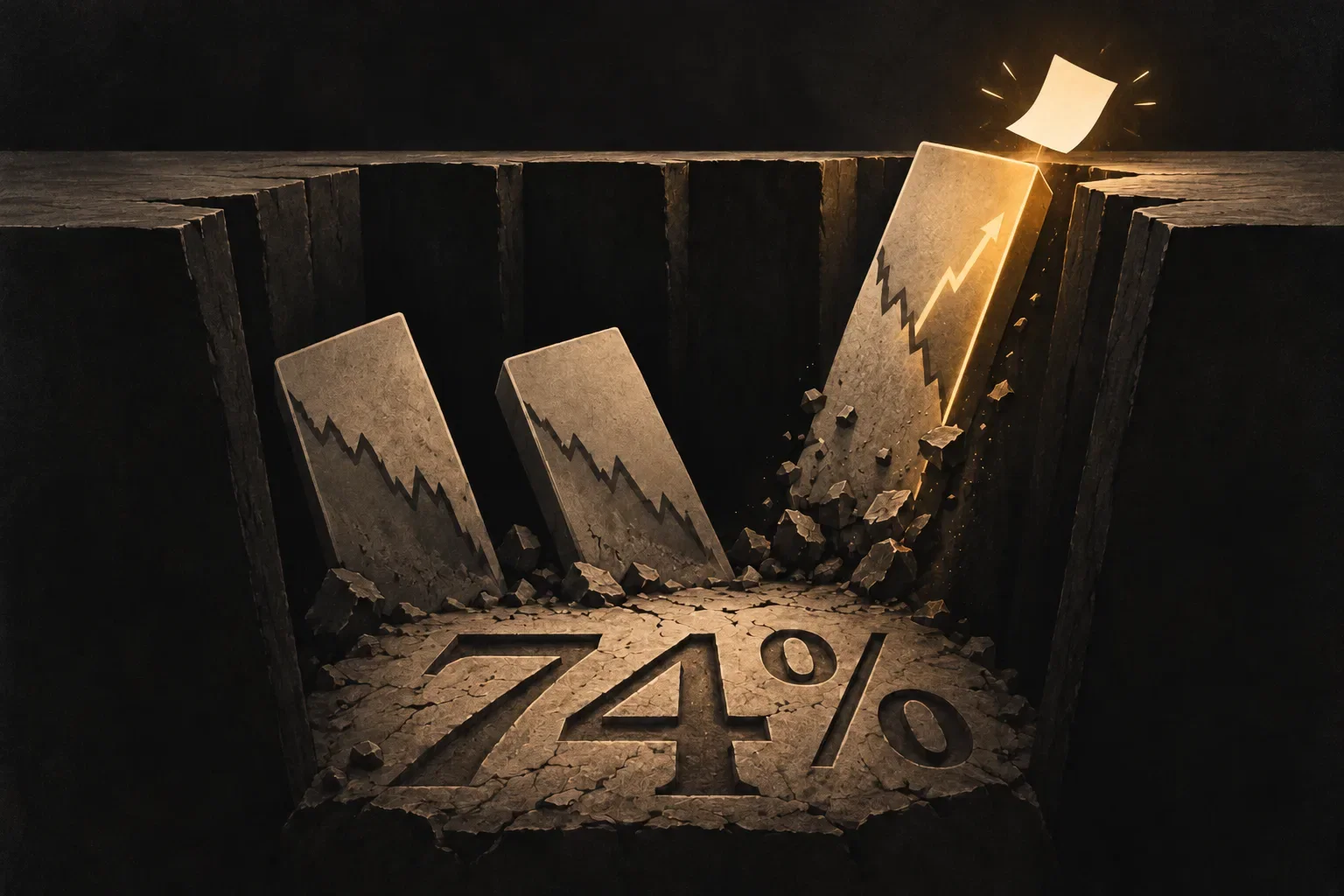
This spring, the stock soared from around $8 to $34.17 in six weeks. Today it trades at $8.85, down 74%. The market simply couldn’t wait.
The numbers need to be viewed with a cool head. Second-quarter revenue reached $10.5 million, up 22% from the previous quarter but down 27% from a year earlier, as the company is deliberately exiting the mobile business. Yet its market value exceeds $2.2 billion, roughly 50 times this year’s revenue. On the other hand, during its spring rally the company sold shares for $373 million at an average price of $21.89, and it now has $557 million in cash—one-quarter of its market value.
“We are seeing growing bookings and a record book-to-bill ratio. We are delivering production samples of our GaN- and SiC-based solutions for several new customer programs, including next-generation data centers built on 800 V architecture. We expect selected hyperscalers and XPU platforms to begin ramping in 2027.”
Chris Allexandre, CEO of Navitas Semiconductor, on the quarterly results
Management is targeting a $3.5 billion market by 2030. For the third quarter, it is forecasting revenue of $13.5 million, which would mean a return to year-over-year growth. The company will report results on November 3, and that will be the first test of whether its big promises about Nvidia are starting to translate into real money.
Three bets, three different payoff timelines
Viking $VKTX | Joby $JOBY | Navitas $NVTS | |
|---|---|---|---|
Share price (Oct. 20) | $26.45 | $4.78 | $8.85 |
Decline from 52-week high | approx. 35% (since Sept. 22) | 73% | 74% |
Market value | approx. $3.6 billion | approx. $4.6 billion | approx. $2.2 billion |
Cash | approx. $1 billion after the offering | $2.3 billion | $557 million |
Nearest milestone | Phase 3 data in 2027 | FAA certification | Results on Nov. 3, ramp-up in 2027 |
It’s worth noting that all three companies took advantage of market euphoria this year to sell shares at prices significantly higher than where they trade today. That was bad news for buyers at the time, but great for the companies: they have enough cash to reach their key milestones without further dilution.
And that’s the whole point. For none of these stocks is the question whether the company will deliver a quarter that’s a few percentage points better. It comes down to one specific event that either happens or doesn’t: an approved drug, a certified aircraft, actual orders from Nvidia. Anyone who buys is buying a ticket to this one question. And they should be prepared for the answer to arrive a year or two from now—and for it not to be the one they want.